How Motor Racing Starting Grids Are Built
Learn how motor racing starting grids are assembled from event rules and official decisions, so you can tell a qualifying result from a final lineup.

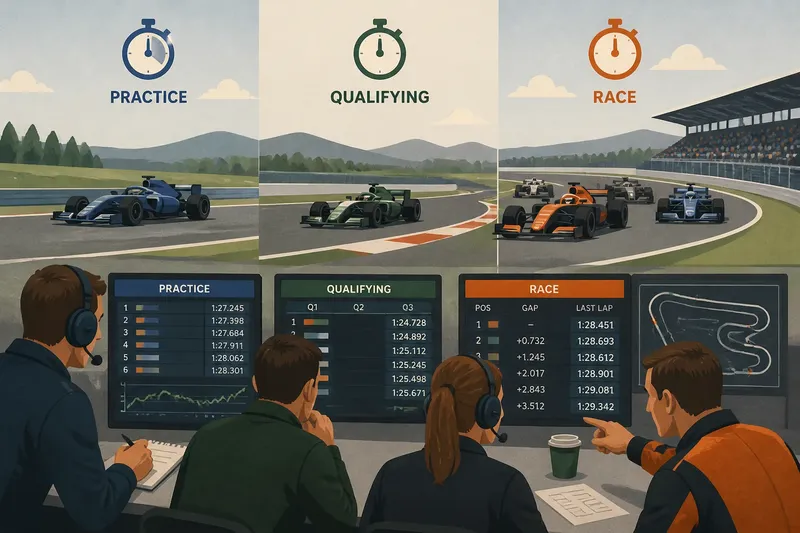
Why can a car start near the front after appearing slower in practice, or line up behind a rival it outpaced in qualifying? A motor racing starting grid is an event-specific lineup, built from the session designated by the rules and any later official adjustments.
The useful distinction is between a session classification and the final order of cars scheduled to start. A classification records a session’s result; the grid records where competitors are due to line up after the event’s procedures have been applied.
Identify the session that supplies the grid
Check the event format before interpreting any result sheet. A weekend may use one qualifying session for its main race, separate qualifying sessions for separate races, or a qualifying contest whose outcome determines positions later.
Look at the timetable and event guide for labels such as “qualifying,” “race qualifying,” or “starting grid.” The latest session is not necessarily the one that sets the next lineup; its purpose depends on the rules for that event.
Practice has a different job: teams use it to prepare cars and drivers for the sessions ahead. A practice classification orders competitors by that session’s recorded results, but it is not a qualifying classification and ordinarily does not award grid positions. Only an event rule that explicitly assigns practice a grid-setting role would make its order relevant to the lineup.
Check the session name and the race it applies to before comparing positions.
Keep qualifying classifications separate from the final grid
A qualifying classification reports how competitors ranked under that session’s criteria. Depending on the format, the ranking may use a timed lap, advancement through successive rounds, or another stated method. It answers who achieved which place in qualifying, not automatically where every car will start.
The final grid is produced after that result is interpreted under the event rules. A qualifying place may be changed by an official penalty, an eligibility decision, or another rule-based adjustment. Conversely, a competitor’s starting position can reflect a later event outcome rather than the place shown on the qualifying classification.
Imagine a fictional event where Maya’s car is classified third in qualifying, while Leo’s is fourth. If officials later apply a grid penalty to Maya under that event’s rules and move her behind Leo, the revised grid puts Leo ahead at the start; the qualifying classification still records Maya’s third-place session result.
Use the qualifying sheet to understand session performance and the final grid to locate each starter.
Understand what a classification does and does not compare
A classification is evidence of performance in a defined session, not a universal ranking of car speed. Track conditions can change during the session, while traffic, timing, and the format can affect which attempts count or which competitors advance.
If rain begins between two drivers’ attempts, their recorded laps come from different conditions. The classification still establishes their official order under the session’s rules, but it does not by itself settle how they would compare on an unchanged track.
Separate qualifying groups need particular care. The event’s method for combining group results determines the classification; comparing isolated lap times may overlook different conditions or group procedures.
Trace the steps from session result to starting position
Follow the documents in sequence rather than treating one sheet as the whole story:
- Find the timetable or event guide and identify the session assigned to set this race’s grid. If it names qualifying or a separate race, use that route; if the session is practice, do not treat its classification as the grid unless the rules explicitly say so.
- Open the relevant session classification and note its format, such as timed-lap ranking or multi-round progression. If it is the designated grid-setting session, use it as the starting point; otherwise, find the result the rules specify.
- Check whether the result combines groups, rounds, or a separate contest. If the document names a combining method, apply that stated order; if the sheets remain unclear, consult the event guide rather than comparing unrelated times.
- Look for a provisional or revised status on the grid. If it is provisional, wait for the official final version; if it is marked final, use that version as the current lineup.
- Read official notices for penalties or other decisions. If a notice changes a position, follow the revised grid; if no change is listed, retain the position shown on the final grid.
- Check for vacant slots or non-starters. If a car is withdrawn or not listed as starting, do not assume the empty place means a competitor earned that position through qualifying.
Each document answers a different question: the guide identifies the procedure, the classification records the session, notices explain rulings, and the final grid gives the lineup.
Why can the qualifying result and grid differ?
Does pole position mean that car is the fastest?
Pole position means the car earned the designated first place under the qualifying format and applicable rules. It establishes success in that session, not superiority in every condition or over the full race.
Can practice determine the starting order?
Practice ordinarily prepares teams and drivers rather than setting the grid. Check the event rules for an explicit exception; otherwise, use the designated qualifying result or other specified session.
Why might a car start ahead of a rival it beat in qualifying?
A later ruling or a rule that combines sessions can change the lineup from the qualifying classification. Compare the session sheet with the official notices and final grid to identify the reason.
What does a provisional grid mean?
It is a published lineup that may still change while officials complete the procedures covered by the event rules. Check for a later final or revised grid before treating its positions as settled.
Read the published grid as the event’s lineup
The final grid tells you where each listed starter is scheduled to begin, while the qualifying classification explains the relevant session result. Neither document alone explains every cause of a position, so connect the format, classification, and any official changes.
For a motor racing starting grid, keep one distinction in view: a session classification records what happened in that session, while the final lineup reflects the rules and decisions applied afterward. That lets you discuss a driver’s qualifying result accurately without mistaking it for a complete verdict on pace.