A First Endurance Race: Follow the Handover, Not Every Lap
A first endurance race is easier to follow when you track driver changes, team phases, and class battles instead of trying to watch every lap.
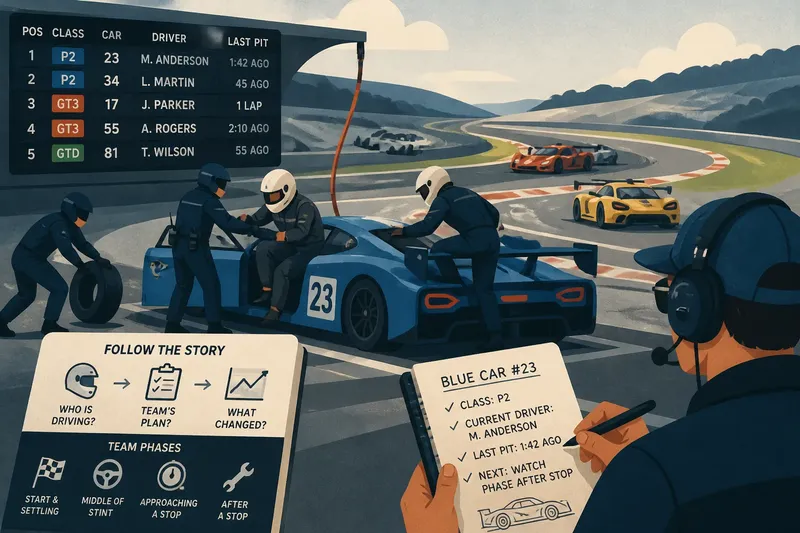
How do you follow a first endurance race without sitting through every lap? Treat the driver handover as your story line: watch who is in the car, what phase the team is working through, and what changes when the next driver takes over. That approach makes a first endurance race easier to enjoy, even if you step away and miss some action.
What should I follow during an endurance race?
Follow a small number of cars and the decisions that connect their stints. A stint is the stretch of driving between one pit stop and the next; it gives a driver, car, and team a temporary chapter in a much longer contest.
Choose one car that interests you and one rival in the same class. Endurance fields may contain several classes, each with its own contest, so a car that is not near the front of the whole field can still be fighting for a class result. The timing tower or official event app can help identify its class and current position.
Keep three questions in mind as you watch: Who is driving? What is the team trying to accomplish in this phase? What changed since the previous stint? These are easier to answer than tracking every pass across the full field.
How can I recognize a driver handover?
A handover usually happens during a pit stop, when one driver leaves the car and another takes over. Look for the team’s driver schedule or event entry list, then compare it with pit-stop coverage, commentary, or the timing display to confirm the change.
The car may receive tires, fuel, or other attention during the same stop, so the handover is only one part of the work. When a broadcast shows the pit lane, watch for the incoming driver waiting near the car and the outgoing driver climbing out; the timing screen may also identify the driver currently credited with the stint.
Say you follow a blue car and see its listed driver enter the pits, followed by a different name beside that car on the event screen. Mark the new driver mentally and watch how the team’s next stretch unfolds; you do not need to know every detail of the stop to understand the change.
Which team phases make the race easier to read?
Think in phases rather than treating every lap as a separate event. A team may be settling into a stint, approaching a planned stop, reacting to traffic, or managing a changing race condition. The same car can have a different immediate task in each phase.
- Start and settling: Notice whether the driver is trying to hold position, avoid trouble, or establish a steady rhythm.
- Middle of a stint: Track nearby cars in the same class and listen for comments about traffic or the car’s behavior.
- Approaching a stop: Watch whether the team brings the car in, keeps it out, or adjusts the plan after an interruption.
- After a stop: Check who is driving, where the car reappears in the class order, and whether it has clear track or traffic ahead.
A pit stop can reshuffle a live order without changing the underlying contest in the way a casual glance suggests. Compare the car with its class rivals and listen for whether they have also stopped before deciding what the position change means.
How do I keep track when several classes share the track?
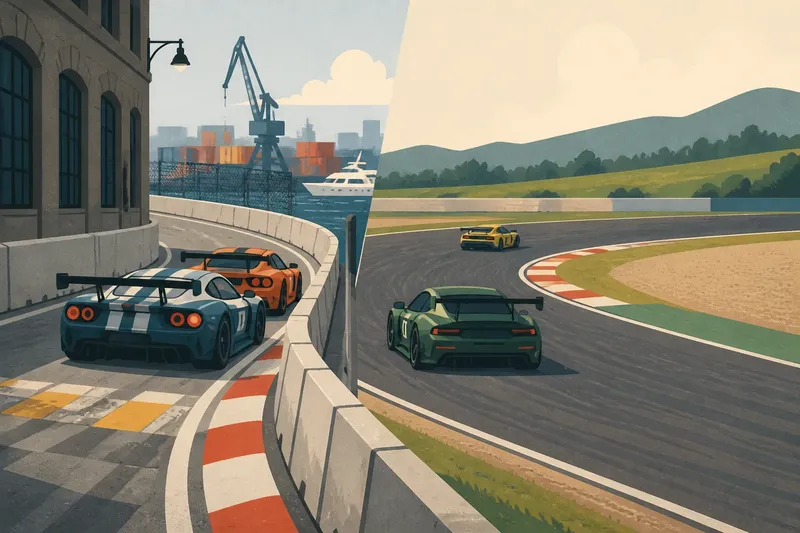
Use the class label as your first filter. A prototype and a production-based car may pass one another, but that does not necessarily mean they are direct rivals; the meaningful comparison is usually with cars entered in the same class.
Color-coded timing screens, class abbreviations, and broadcast graphics can make this distinction visible. If the display is busy, write down a car number and class name on a note, then return to those two details whenever you come back to the screen.
Traffic is part of the story, too. A faster class car may approach a slower one while both are pursuing separate class goals; watch whether your chosen car clears traffic cleanly or loses time behind it, rather than reading every pass as a position battle.
What can I do if I miss a stint or a key moment?
Rejoin through the current state, not by trying to reconstruct every lap. Check the running order, identify the driver now in your chosen car, and look for the latest pit-stop information or a short replay if one is available.
For a flexible viewing plan, set a few natural check-in points: the opening phase, a driver change, and a later phase of the race. Between them, take a meal break, stretch, or listen while doing something else. Endurance viewing works well when attention can come and go without losing the main thread.
Imagine you step away while your car is in the middle of a stint and return after a stop. The timing display shows a new driver and a nearby class rival; compare their current positions and listen for an update about the stop, then resume following the next phase rather than searching for every missed pass.
Should I follow one car or the overall race?
Start with one car and widen your view when a clear event invites it. A pit cycle, a class lead changing hands, or a developing battle can make the broader order useful, but keeping one anchor car prevents the field from becoming a blur.
If your car retires or its story becomes quiet, choose another entrant in the same class and note why you switched. That could be a close contest, a driver change you want to understand, or a team trying to recover after a setback. The goal is not to monitor everything; it is to have a thread you can pick up again.
Which questions help me follow the race?
Does every driver take the same number of stints?
No. Driver schedules depend on the event’s rules and each team’s plan, so one driver may return later while another completes a different share of the driving. Follow the names shown for your chosen car rather than assuming a fixed rotation.
Does a pit stop always mean a driver change?
No. A car can stop for service without changing drivers, and a change can happen alongside other work. Confirm the driver through the broadcast or event timing information instead of inferring it from the stop alone.
Why did my car lose places after stopping?
Other cars may have stopped at different times, so the live order can temporarily reflect pit timing rather than a settled comparison. Check the class order and wait for the cars to complete their stops before drawing a conclusion about the contest.
Can I enjoy the race if I only watch part of it?
Yes. Pick a car or class contest, use the current timing and driver information to rejoin, and follow the next team phase. Missing a segment does not erase the story you have already been tracking.
For a first endurance race, keep the handover as your anchor: note the driver, the phase, and the class rival nearest to your car. That simple routine gives you a thread to return to after any break, while leaving room to enjoy the moments that happen outside your chosen battle.